Rainwater Research Project
Watch this short video about the essential elements about the project
The goal of this research project is to pilot a rainfall collection system on TRU’s Kamloops campus using rain barrels, and design and test methods for determining the physical and chemical characteristics of the collected water to evaluate its ability to be reused, such as for irrigation. Rain event depth, duration, intensity, roof design and roof material combine to influence water quality and quantity. By collecting site specific data on campus and involving students from a variety of disciplines, this research aims to provide a foundation for future rainwater collection and reuse at TRU. Collecting and reusing rainwater is just one example of TRU’s focus and commitment to sustainability.
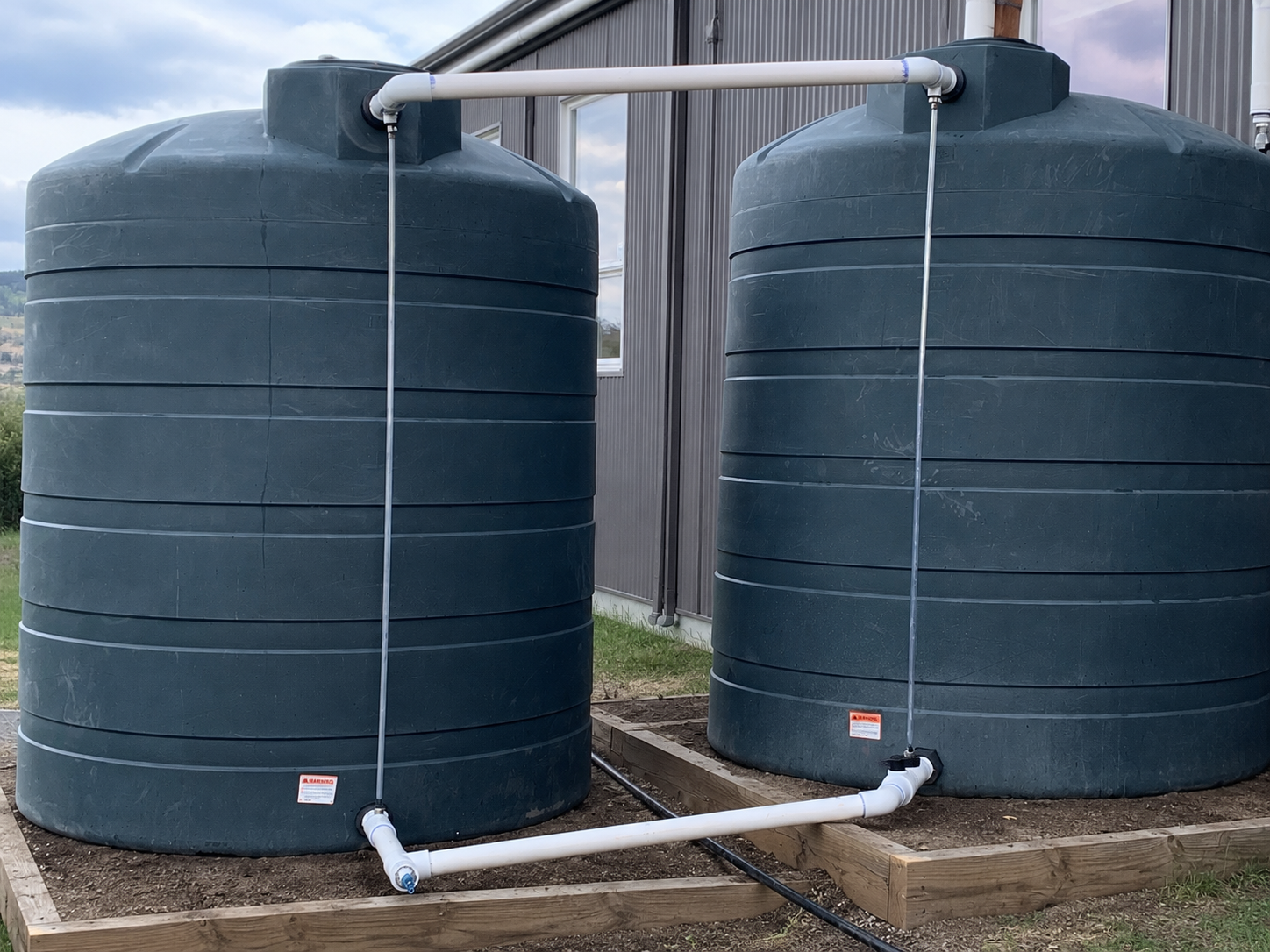
The research project infrastructure consists of two installed cisterns (combined capacity of 10,000 litres (2640 gallons)) capturing water from one side of the roof (approximately 442 square meters) of the TRU Research Emergency Management building (Wildfire research) on the Kamloops campus. The project started May 4, 2026 and will go until the end of October 2026.
The project interdisciplinary collaboration team involves faculty from Chemistry, Geography and Environmental Studies, Physics, and Computing Science along with staff members from the TRU Sustainability Office. TRU Facilities are also involved as they will be supporting the installation.
Current student research partners include those from the departments of Computer Science and Chemistry.
Current TRU faculty members conducting research with this project, along with their CVs:
Dr. Sharon E. Brewer - Faculty of Science (Chemistry)
Dr. Sharon Brewer is currently an Adjunct Professor at TRU where she was an Associate Professor for over 31 years, and she is the Registrar of the Association of the Chemical Profession of British Columbia (ACPBC). Her research interests include analytical method development, environmental analysis and water treatment, remote instrumentation as a teaching tool, inquiry-based laboratory curriculum, and OER use and assessment. As part of this research project Sharon and students are investigating water quality of collected roof runoff via quantitative and screening analysis for a variety of chemical species and potential contaminants. This work will contribute to understanding of the chemical composition of roof runoff water and how it varies, and its assessment for reuse purposes.
Dr. Sharon E. Brewer Curriculum Vitae
Dr. Darryl Carlyle-Moses - Department of Geography & Environmental Studies
Dr. Darryl Carlyle-Moses holds a PhD in Physical Hydrology from the University of Toronto and is a Professor in the Department of Environment, Culture, and Society – Program in Geography and Environmental Studies at TRU. Darryl’s research interests include how disturbances, such as harvest logging, insect infestations, and wildfire impact water and energy fluxes in forest environments. Additionally, Darryl’s research interests extend to urban environments, particularly the role of trees as green infrastructure in mitigating flood and heat related risk. This current research project aims to examine the applicability of a commonly used forest hydrology model – the Gash Analytical Model of Rainfall Interception Loss – in simulating rainfall storage, evaporation, and runoff from urban roofs. Successful application of this model to urban roofs would assistant urban water resources managers, planners, and others interested in understanding the role of buildings in the urban hydrologic cycle in general, and more specifically, allow for the determination of the quantitative importance of roof runoff for possible capture and subsequent use as a form of water supply for irrigating urban greenspaces.Dr. Darryl Carlyle-Moses Curriculum Vitae